Glad to see you
Mobile is under construction.
Please refer to desktop

Glad to see you
Mobile is under construction.
Please refer to desktop
The Project Tags

Food & Agriculture

Nonprofit/B2C

Mobile App

Geolocation
Context
Since 2018, Ally Financial has partnered with the Sean Anderson Foundation and the Thurgood Marshall College Fund to inspire and give back to the Motor City: Detroit, Michigan. As the city continues to evolve following decades of industrial change, food access has emerged as a critical challenge in many neighborhoods. In 2020, Ally invited students to propose solutions to support the communities in Detroit that need it the most. This gave me and my team the opportunity to build Everybody Eats 313.
Problem
Detroit desperately struggles with food insecurity, nutrition issues and food deserts. This is due to the lack of Access to grocery stores and the high costs and low quality of the stores rarely available. Furthermore, many people lack basic education about nutrition.
households did not own a car to reach distant supermarkets
households did not own a car to reach distant supermarkets
1/3
1/3
Walmart stores within city limits
Walmart stores within city limits
0
0
of residents lacked easy access to a full-service grocery store
of residents lacked easy access to a full-service grocery store
30%
30%
of Michigan adults meet recommended fruit and vegetable intake
of Michigan adults meet recommended fruit and vegetable intake
<12%
<12%
The city of Detroit is hungry for change.
The city of Detroit is hungry for change.
The Process
None of our team members were from or lived in Detroit, so we spent a lot of time upfront asking questions to understand the reality of food access in the city. We wanted to ensure we were solving the right problem, not recreating a system that might work for our city but not Detroit.
We interviewed five Detroit-based students to understand how people actually get groceries in the city. While access challenges surfaced quickly, three interviewees also highlighted a disconnect around what foods were truly healthy versus simply marketed that way. This shifted our strategy to include food education. As we iterated, we needed to stay close to the consumer so we kept one participant involved throughout the process to regularly pressure-test our direction.
We interviewed five Detroit-based students to understand how people actually get groceries in the city. While access challenges surfaced quickly, three interviewees also highlighted a disconnect around what foods were truly healthy versus simply marketed that way. This shifted our strategy to include food education. As we iterated, we needed to stay close to the consumer so we kept one participant involved throughout the process to regularly pressure-test our direction.
Talking To The People
Talking To The People
Before designing our solution, we looked at what programs already existed to address food insecurity in Detroit, including food banks and community food access initiatives. While these efforts were impactful, many still required residents to travel outside their neighborhoods. During this research, we also uncovered a key opportunity: Detroit’s network of community gardens and local farms could help supply fresh produce, creating a more localized and organic pipeline for Everybody Eats 313.
Before designing our solution, we looked at what programs already existed to address food insecurity in Detroit, including food banks and community food access initiatives. While these efforts were impactful, many still required residents to travel outside their neighborhoods. During this research, we also uncovered a key opportunity: Detroit’s network of community gardens and local farms could help supply fresh produce, creating a more localized and organic pipeline for Everybody Eats 313.
Uncovering Insights
Uncovering Insights
Since we were not all in the same place, we spent a few hours on Zoom with a Miro board throwing out ideas and building on each other’s thinking. We had a lot of solid directions, but we narrowed it down using three simple criteria: did it actually solve the problem, was it realistic to pull off, and would people actually use it? The latter is where our recurring user feedback came in handy.
Since we were not all in the same place, we spent a few hours on Zoom with a Miro board throwing out ideas and building on each other’s thinking. We had a lot of solid directions, but we narrowed it down using three simple criteria: did it actually solve the problem, was it realistic to pull off, and would people actually use it? The latter is where our recurring user feedback came in handy.
Weighing Tradeoffs
Weighing Tradeoffs
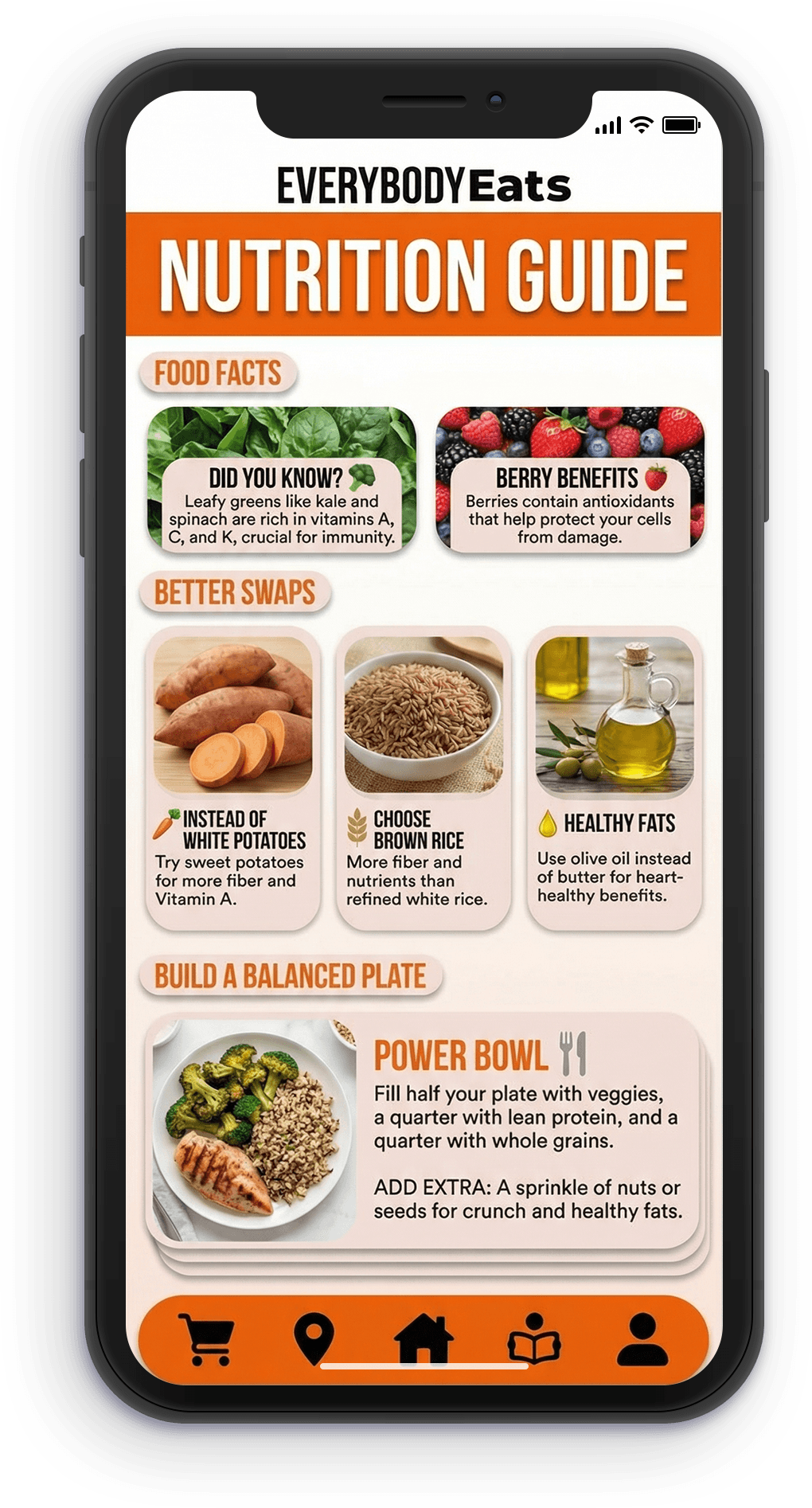
The Nutrition Curriculum helps residents better understand what healthy eating actually looks like. Inside the app, users can explore food facts, learn how to build balanced meals, and see healthier meal ideas based on the items they are already purchasing.
Nutrition Matters
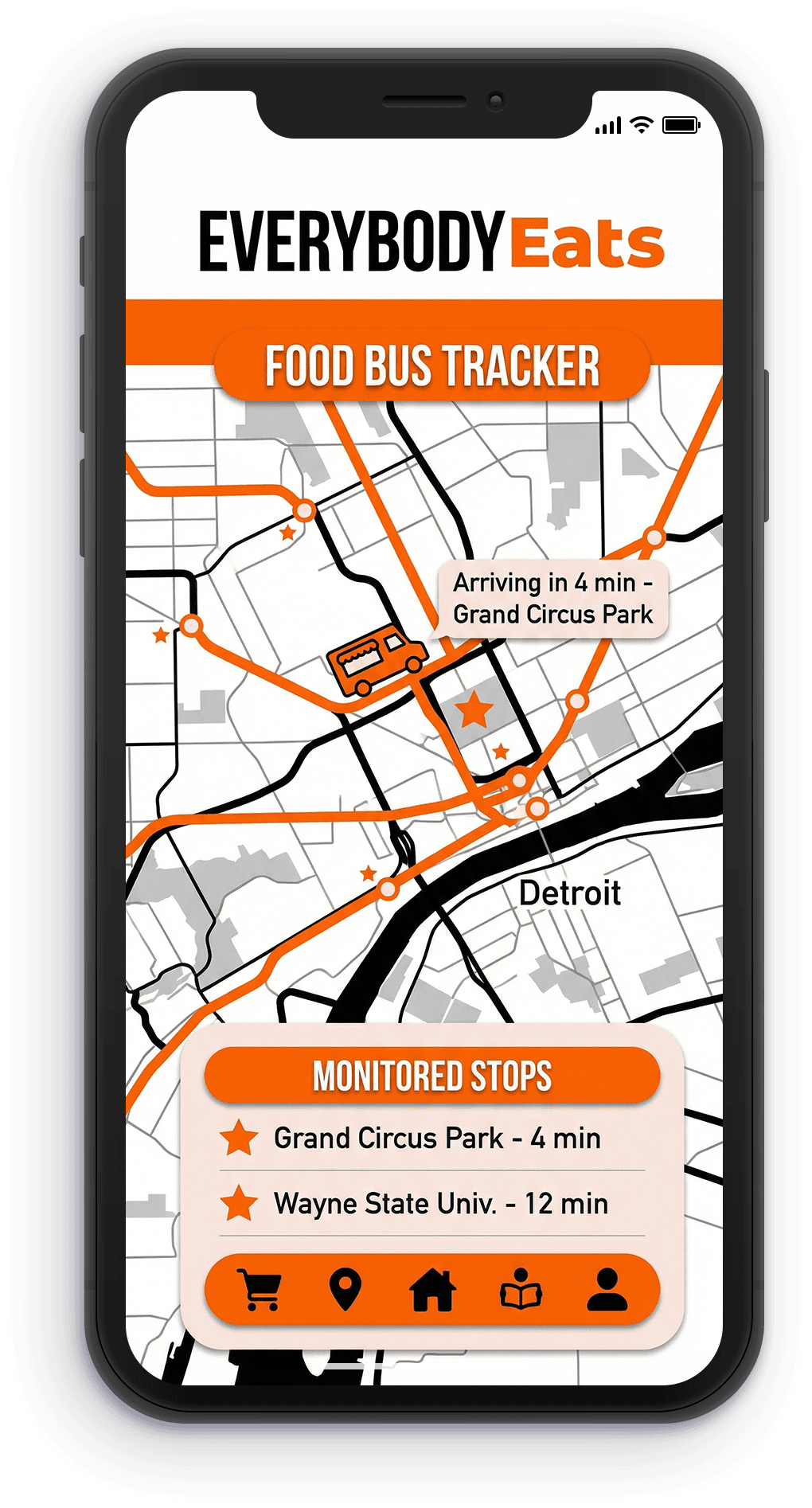
The Mobile Market is a fleet of electric food trucks that bring groceries and fresh produce directly into neighborhoods where access to full-service grocery stores is limited. By circulating through designated routes across the city, the trucks reduce the transportation barrier many residents face and create a consistent, local source for healthy food.
The Mobile Market is a fleet of electric food trucks that bring groceries and fresh produce directly into neighborhoods where access to full-service grocery stores is limited. By circulating through designated routes across the city, the trucks reduce the transportation barrier many residents face and create a consistent, local source for healthy food.
Mobile Market
Mobile Market
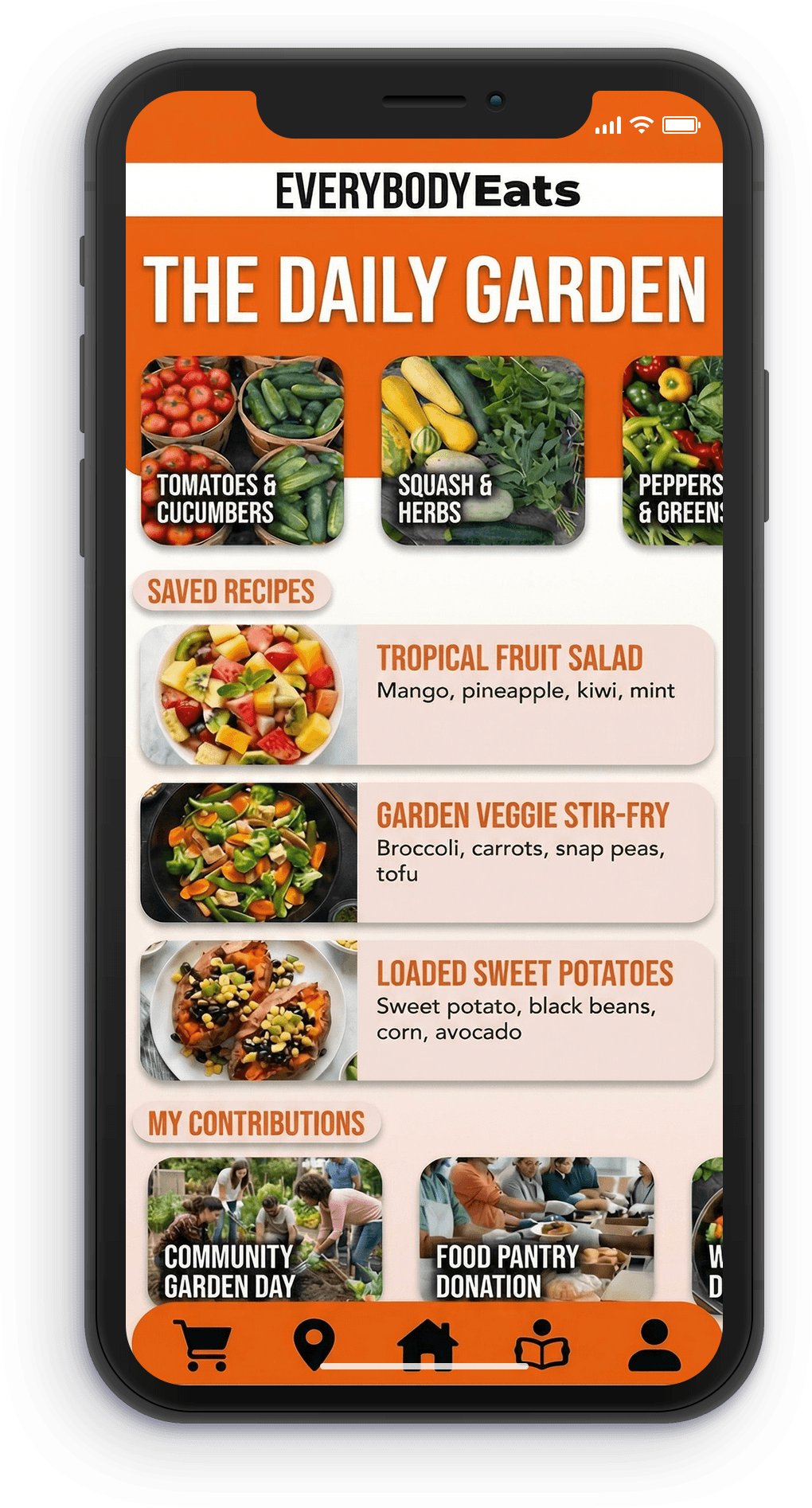
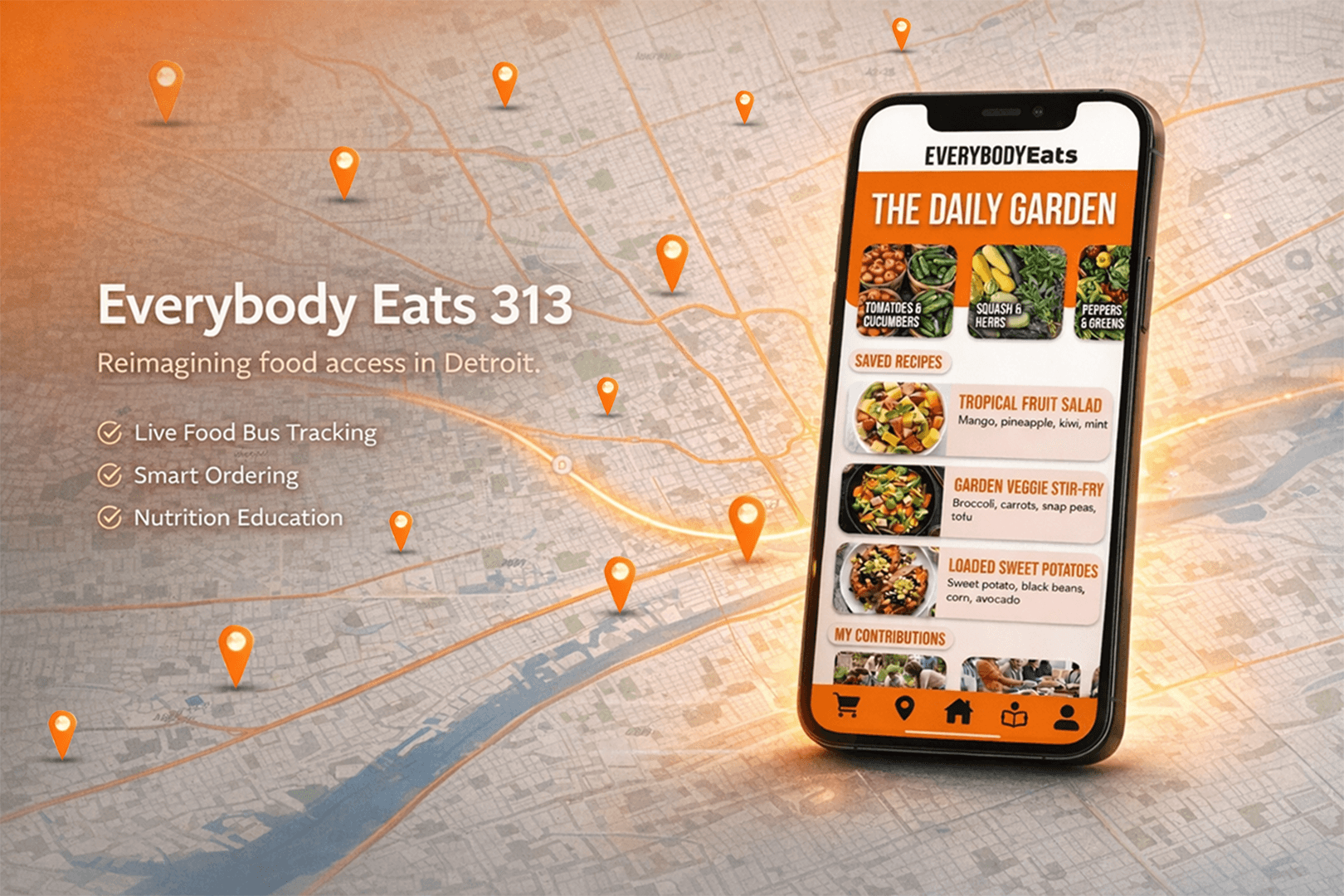
Everybody Eats 313 is a mobile platform designed to make healthy food more accessible in Detroit neighborhoods affected by food deserts. The app allows residents to track the location of a mobile food market in real time, place pickup orders for fresh groceries, and access simple educational tools that help them make healthier food choices.
Everybody Eats 313
The Nutrition Curriculum helps residents better understand what healthy eating actually looks like. Inside the app, users can explore food facts, learn how to build balanced meals, and see healthier meal ideas based on the items they are already purchasing.
Nutrition Matters
Everybody Eats 313 is a mobile platform designed to make healthy food more accessible in Detroit neighborhoods affected by food deserts. The app allows residents to track the location of a mobile food market in real time, place pickup orders for fresh groceries, and access simple educational tools that help them make healthier food choices.
Everybody Eats 313
The Solution
An electric food truck that could bring fresh, healthy meals right into food deserts, paired with a mobile app to track its location and even request specific items. To make the impact long lasting, we built in a nutrition curriculum designed to help Detroiters understand what goes into healthier meals and how to make them part of everyday life.
of Healthy meals enabled per month for Detroit households
of Healthy meals enabled per month for Detroit households
#
#
of active users with household income below $60K
of active users with household income below $60K
%
%
%
%
of stress-free alarms triggered per user per week
of stress-free alarms triggered per user per week
Sell through rate of healthy meals
Sell through rate of healthy meals
%
%
Success Metrics
Success Metrics
